
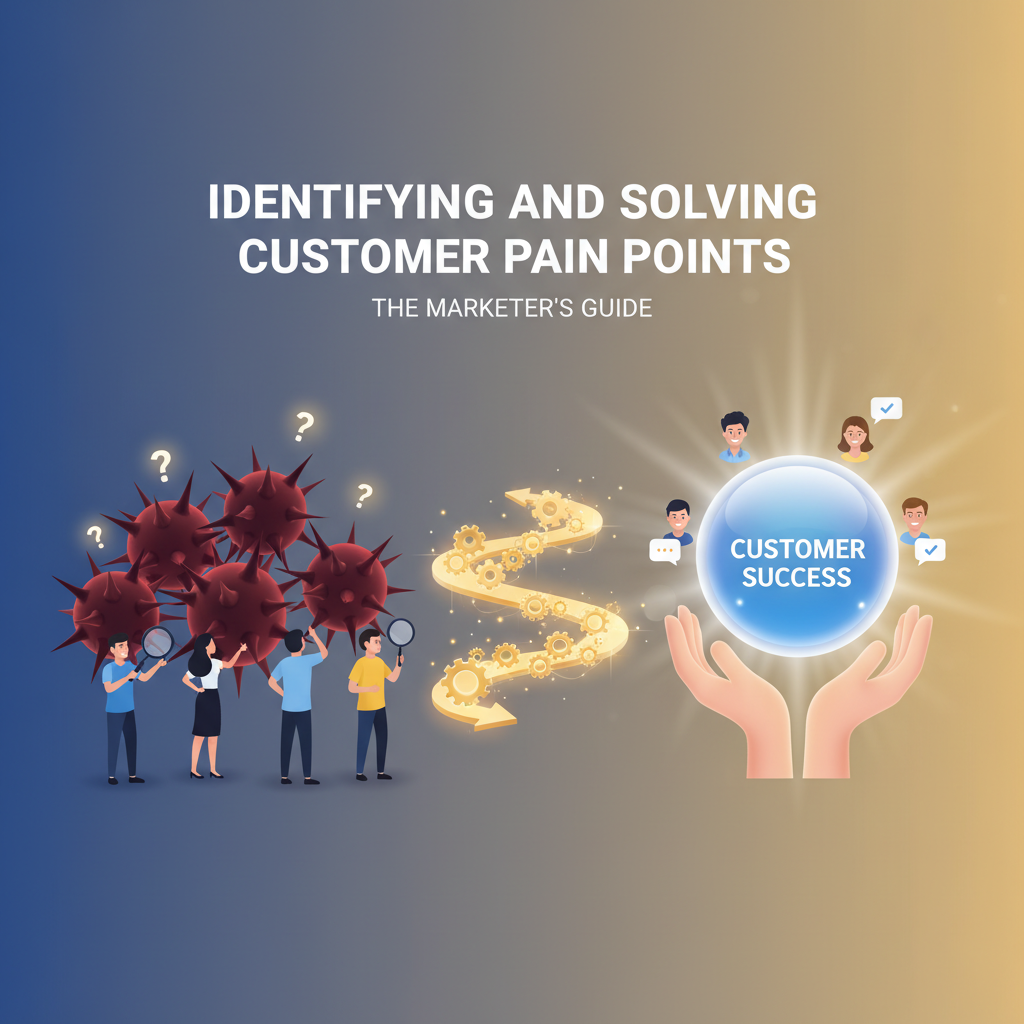
Identifying and Solving Customer Pain Points: The Marketer’s Guide
Introduction: Why Customer Pain Points Matter
Every digital marketer faces the ongoing challenge of understanding and addressing customer pain points. But what is a customer pain point, and why should it take center stage in your marketing strategy? Research reveals that 89% of high-performing businesses view customer pain points as foundational to delivering exceptional customer experiences and marketing outcomes (Walker, 2019).
Gen Z and millennial consumers - who represent a rapidly growing segment of online buyers - are especially proactive in voicing their frustrations. For digital marketers aged 20 to 30, mastering the pain point meaning, studying customer pain points examples, and learning how to identify customer pain points are indispensable skills for standing out in today’s crowded digital landscape.
What Is a Customer Pain Point?
A customer pain point is any specific problem, obstacle, or frustration a customer encounters when engaging with a product or service (Richardson, 2010). These pain points can range from minor irritations to major barriers that halt conversions or erode trust.
Common examples include confusing site navigation, unclear information, slow response times, or unmet product needs. Addressing these pain points goes beyond mere customer satisfaction - it has a direct impact on conversion rates and brand loyalty. In fact, 32% of customers say they would stop doing business with a brand they loved after just one negative experience (PwC, 2018).
Understanding the Pain Point Meaning in Marketing
In digital marketing, the pain point meaning extends far beyond surface-level annoyances. Pain points represent strategic opportunities - critical moments where a customer’s challenge signals a chance for marketers to refine their messaging, improve products, and optimize experiences.
Knowing the customer pain points meaning enables you to:
- Personalize communication with precision
- Enhance product features that solve real problems
- Optimize funnels for every stage of the buyer journey
- Elevate post-purchase experiences for retention
Understanding the pain point meaning empowers you to dig beneath high bounce rates, abandoned carts, or low engagement. This shift in thinking transforms problems into actionable insights - fueling campaigns that resonate and propel growth.
Types of Customer Pain Points
Customer pain points present themselves in various forms - but most cluster into four main categories in the marketing world:
1. Financial Pain Points
Money-related concerns like high costs, unclear pricing, or limited payment options.
Example: If users are bouncing from your pricing page, it may point to price sensitivity or confusion.
2. Productivity Pain Points
Wasted time, inefficient workflows, and complex processes that hinder progress.
Example: High drop-off rates during a lengthy checkout process indicate a productivity pain point.
3. Process Pain Points
Operational or communication breakdowns, including vague messaging or inconsistent support across channels.
Example: Customers receive conflicting information via email and your website, triggering frustration.
4. Support Pain Points
Insufficient or slow support and assistance when users need help.
Example: Automated chatbots failing to address specific questions, leading to low satisfaction.
(Chaffey, 2019)
Customer Pain Points Examples
Bringing theory to life with actionable customer pain points examples helps marketers empathize, anticipate behaviors, and sharpen their strategies.
- Confusing Navigation: A user searching for marketing automation tools gets lost in a maze of outdated menus and jargon. This navigation pain point pushes them toward competitors.
- Limited Payment Methods: A Gen Z shopper wants to use a digital wallet but can’t. The lack of options sparks a cart abandonment - a classic financial pain point.
- Slow Customer Service: A marketer seeks help with campaign tracking but only receives a response three days later. This support pain point can drive customers away.
- Unclear Pricing: A freelancer considering SaaS options is unable to find transparent pricing, which breeds skepticism and reduces conversions.
- Overwhelming Onboarding: New users are bombarded with complex setup tasks and notifications, hampering productivity and leading to disengagement.
These customer pain points examples aren’t just anecdotal; they reflect broader trends. Sixty-six percent of customers expect companies to understand their frustrations, yet only 34% feel this actually happens (Salesforce, 2022).
How to Identify Customer Pain Points
Learning how to identify customer pain points is essential for digital marketers who want to build relevant and compelling campaigns. Here’s how to turn research into insight:
1. Customer Surveys and Feedback
Gather qualitative feedback with open-ended questions like, “What’s your biggest challenge using our platform?” or “How can we serve you better?” Mix in ratings and quantitative measures for a fuller picture.
2. Social Listening and Review Analysis
Regularly monitor online reviews, social channels, and forums for unfiltered feedback. This direct input reveals sentiment trends and recurring pain points.
Stat: 90% of consumers say reading online reviews has influenced their buying decisions (BrightLocal, 2023).
3. Customer Support Data
Analyze support tickets, chat logs, and call transcripts for patterns. High volumes on certain topics can indicate core pain points.
4. Website and App Analytics
Use heatmaps, session recordings, and funnel analysis to pinpoint where users drop off or face obstacles.
5. Interviews and Focus Groups
In-depth conversations provide nuance, letting you uncover pain points meaningfully and contextually.
6. Competitor Benchmarking
Study how competitors address customer issues - both successful strategies and failed tactics inform your own approach.
By layering these techniques, you’ll bridge assumptions with real needs, ensuring your marketing strategy is truly customer-centric.
A List of Customer Pain Points Every Marketer Should Know
Building a living list of customer pain points keeps your team focused and agile. Here are some of the most common pain points marketers encounter:
- Complex Pricing Structures: Cause confusion and reduce trust.
- Limited Payment Methods: Exclude popular choices like mobile wallets.
- Long Response Times: Lead to frustration and uncertainty.
- Unclear Value Proposition: Leave buyers doubting your product or service.
- Cluttered Interface: Hinder navigation and task completion.
- Lengthy Forms: Discourage sign-ups with too much required info.
- Technical Bugs or Glitches: Interrupt the buyer journey and erode confidence.
- Fragmented Experience: Inconsistent messaging across channels creates confusion.
- Lack of Self-Service: Forces users to rely on support for simple tasks.
- Security or Privacy Concerns: Raise objections about data usage.
Keep this list of customer pain points updated as you gather more feedback and insight - being proactive prevents minor annoyances from becoming reasons for churn.
Strategies to Address Customer Pain Points
Transforming the pain point meaning into action is where marketers make the biggest impact. Here’s how:
Personalize Your Messaging
Leverage segmentation and behavioral insights to create messages that speak directly to individual challenges (Chaffey & Ellis-Chadwick, 2019).
Simplify the Journey
Remove roadblocks. Reduce form fields, clarify calls to action, and streamline the checkout process. A/B test variations to find the smoothest path.
Be Transparent
Share clear pricing, openly communicate any fees, and set honest expectations around delivery, support, and returns.
Upgrade Support
Offer omnichannel assistance - including live chat, email, and DMs - and develop robust self-service resources. Fast, helpful responses are key: 82% of consumers expect immediate replies to inquiries (HubSpot, 2023).
Use Social Proof
Highlight testimonials and case studies that directly address and resolve customer pain points. This builds faith in your solutions.
Monitor and Refine
Constantly review analytics, feedback, and support trends. Iterate quickly to address emerging challenges and exceed customer expectations.
Addressing pain points isn’t a one-time fix - it’s an ongoing commitment and a pillar of any effective, customer-driven marketing strategy.
Conclusion: Closing the Gap in Your Customer Experience
Understanding customer pain points isn’t just a marketing buzzword - it’s the backbone of every successful digital strategy. For marketers in their 20s and 30s, fully grasping the pain point meaning and consistently identifying customer pain points are the foundations for trust, loyalty, and long-term growth.
Too many organizations lose potential customers not from lack of effort, but from misunderstanding the root causes of dissatisfaction. By leveraging research, feedback, and continuous improvement, you can close the experience gap - turning obstacles into advocates and frustrations into business momentum.
Build Your Marketing Strategy Now
Ready to leverage deep customer insight for greater campaign impact? Build Your Marketing Strategy Now and turn pain points into persuasive messaging that drives results.
Build Your Marketing Strategy Now
References
BrightLocal. (2023). Local Consumer Review Survey 2023. https://www.brightlocal.com/research/local-consumer-review-survey/
Chaffey, D. (2019). Digital Marketing: Strategy, Implementation and Practice (7th ed.). Pearson.
Chaffey, D., & Ellis-Chadwick, F. (2019). Digital Marketing: Strategy, Implementation and Practice (7th ed.). Pearson.
HubSpot. (2023). The State of Customer Service in 2023. https://www.hubspot.com/state-of-customer-service
PwC. (2018). Experience is everything: Here’s how to get it right. https://www.pwc.com/gx/en/services/consumer-markets/consumer-insights-survey.html
Richardson, A. (2010). Using customer journey maps to improve customer experience. Harvard Business Review. https://hbr.org/2010/11/using-customer-journey-maps-to-improve-customer-experience
Salesforce. (2022). State of the Connected Customer. https://www.salesforce.com/resources/research-reports/state-of-the-connected-customer/
Walker, S. (2019). Customers 2020: A Progress Report. https://walkerinfo.com/reports/customers-2020-a-progress-report/

About Nguyen Thuy Nguyen
Part-time sociology, fulltime tech enthusiast