
The ADDIE Model: The Ultimate Blueprint for Effective Training in HR
Introduction
Equipping employees with the right skills and knowledge is one of the most significant responsibilities for HR professionals. With evolving technology and shifting organizational structures, today's training programs demand flexibility, precision, and impact. The ADDIE model has become a proven, systematic approach that transforms how training is designed and delivered in the HR landscape.
Whether managing onboarding, talent development, or compliance initiatives, mastering the ADDIE model for training can make your programs more effective, measurable, and relevant. This guide explores the ADDIE model design in detail - providing clarity, context, and actionable strategies tailored for U.S.-based HR professionals.
What is the ADDIE Model?
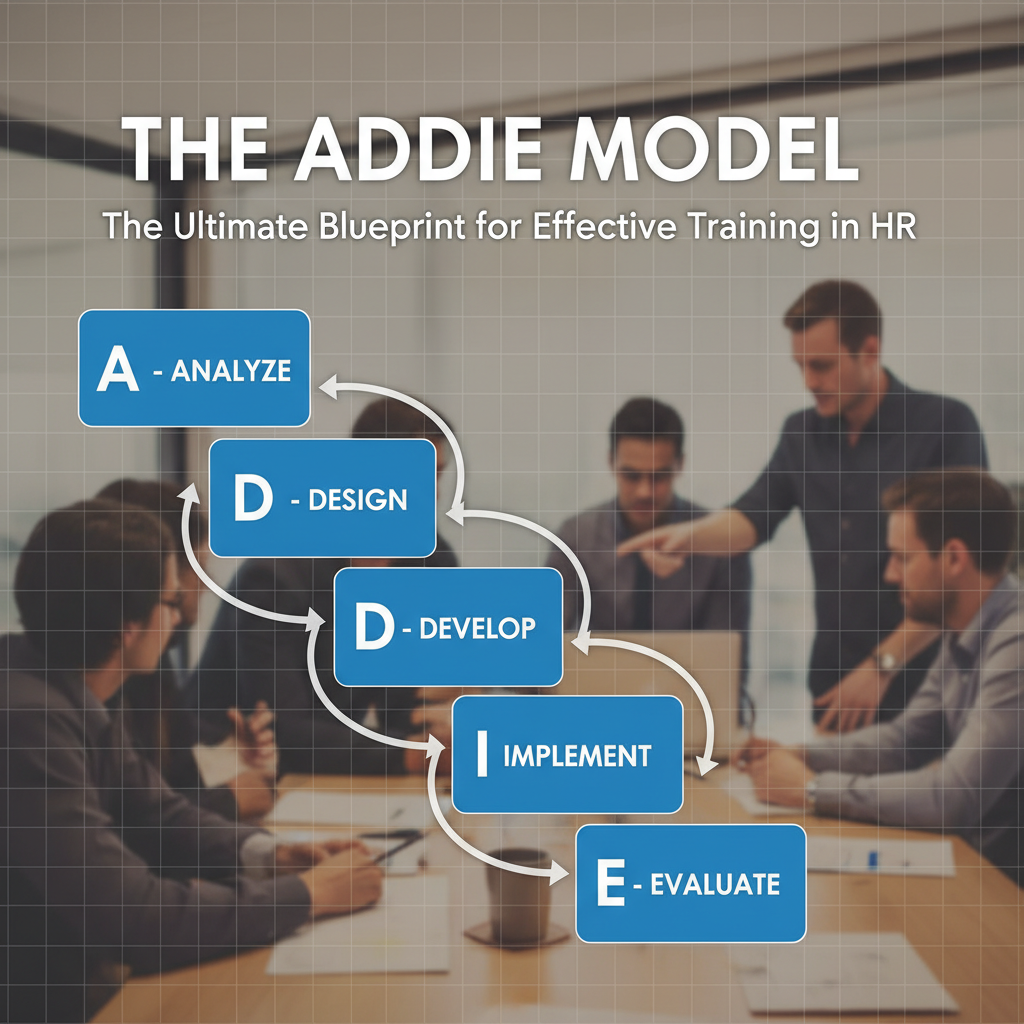
The ADDIE model is a foundational instructional design framework used to develop effective educational and training programs in organizations. The acronym stands for Analysis, Design, Development, Implementation, and Evaluation - five phases, sequential but often iterative, that shape impactful learning from conception to outcomes assessment (Branson et al., 1975).
Since its introduction in the 1970s, the ADDIE training model has remained central to instructional design across corporate, government, and educational sectors due to its adaptability and clarity (Molenda, 2003). Within HR, the ADDIE learning model ensures structured, goal-aligned training that meets both organizational and employee needs.
The Five Stages of the ADDIE Model
Success with the ADDIE learning model relies on understanding each of its five core stages:
1. Analysis
The Analysis phase establishes the foundation for every training initiative. HR professionals identify learning needs, performance gaps, and goals specific to their audience (Hodell, 2016). Core activities include:
- Conducting needs assessments
- Analyzing business objectives and learner characteristics
- Auditing current training materials
- Defining the project scope
Robust analysis ensures training aligns with business requirements and employee expectations. For instance, the LinkedIn Workplace Learning Report (2022) found that 49% of employees prefer training tailored to organizational needs, highlighting the value of thorough analysis.
2. Design
During the Design phase, HR teams structure and plan the overall training experience. This stage involves establishing learning objectives, sequencing content, developing assessment strategies, and selecting delivery methods (Branch, 2009).
Key deliverables are:
- Clear learning objectives and outcomes
- Storyboards or course outlines
- Assessment instruments
- Determination of delivery methods (e-learning, instructor-led, blended)
Effective design ensures seamless alignment between learning outcomes and organizational goals - an essential component of high-impact training (Salas et al., 2012).
3. Development
Development brings the design to life. Instructional materials, activities, resources, and technology are created and refined based on the blueprint established in the design phase (Allen, 2006).
Typical development tasks include:
- Producing multimedia, presentations, and handouts
- Creating digital modules or instructional guides
- Conducting pilot tests with sample learners
Pilot testing and gathering feedback at this stage enable quality control before full-scale rollout, reducing errors and maximizing effectiveness.
4. Implementation
Implementation is the stage where employees experience the developed training. Activities in this phase involve:
- Coordinating logistics (scheduling, enrollment)
- Delivering training via in-person, digital, or blended formats
- Preparing facilitators and support personnel
- Ensuring technical support and readiness
Smooth implementation is crucial for learner engagement. According to Training Industry (2022), organizations with efficient implementation processes achieve up to 24% greater training retention.
5. Evaluation
Evaluation measures training effectiveness and highlights areas for continuous improvement. This phase loops insights back into prior stages for ongoing optimization (Kirkpatrick & Kirkpatrick, 2016).
Evaluation methods include:
- Collecting participant feedback post-training
- Assessing knowledge or skill acquisition
- Observing workplace behavior changes
- Measuring impact on organizational metrics
Comprehensive evaluation enables HR teams to verify that learning objectives are met and that training investments deliver tangible results.
How HR Professionals Can Use the ADDIE Training Model
For HR departments, the ADDIE training model is a practical tool that drives business outcomes. Here’s how HR professionals integrate ADDIE model design into daily operations:
- Employee Onboarding: Analyze department-specific needs, then design and develop onboarding programs tailored for diverse new hires.
- Skills Gap Training: Identify skills deficiencies through analysis, design targeted training, and evaluate outcomes for continuous improvement.
- Leadership Development: Develop custom leadership tracks using the design and development stages to cultivate management competencies aligned with organizational values.
By following the ADDIE model for training, HR professionals ensure consistency, collaboration, and measurable outcomes. In fact, the Association for Talent Development (ATD, 2021) reports that organizations using systematic models like ADDIE experience 30% higher learner and management satisfaction than those using ad hoc approaches.
ADDIE Model Examples: Application in Real-World HR Scenarios
Exploring ADDIE model examples demonstrates how the ADDIE learning model works in practice:
Example 1: Compliance Training
- Analysis: Facing new regulations, the HR team audits current knowledge and identifies compliance gaps.
- Design: Learning objectives target recent regulatory changes; interactive online modules are chosen.
- Development: Digital courseware with scenario-based simulations is developed.
- Implementation: Employees complete modules within a set timeframe.
- Evaluation: Knowledge quizzes and compliance metrics track success.
Example 2: Remote Work Policy Training
- Analysis: Surveys reveal confusion about remote work policies.
- Design: Objectives center on technology use, communication, and expectations.
- Development: Video tutorials and guides are produced.
- Implementation: Training is delivered during all-staff meetings and through the LMS.
- Evaluation: Supervisor feedback and collaboration metrics measure improvement.
Example 3: DEI Initiatives
- Analysis: Audits uncover limited diversity awareness among leaders.
- Design: Combined online microlearning with in-person workshops is planned.
- Development: Content is created with input from DEI experts.
- Implementation: Training is rolled out with active leadership involvement.
- Evaluation: Pre- and post-training surveys and hiring metrics gauge impact.
These ADDIE model examples highlight the adaptability of the ADDIE learning model across HR scenarios.
Benefits of the ADDIE Learning Model in Organizational Training
The ADDIE learning model remains a cornerstone of HR and L&D because it delivers:
- Clarity and Structure: Each phase clarifies expectations, minimizing miscommunication (Molenda, 2003).
- Business Alignment: Analysis and evaluation phases ensure training supports strategic objectives.
- Scalability: The process effectively accommodates both enterprise-wide and team-based training.
- Continuous Improvement: The cyclical model enables ongoing refinement.
- Stakeholder Engagement: All phases invite input, leading to more relevant solutions.
- Measurable Results: Standardized assessments support ROI tracking, a top HR priority (Salas et al., 2012).
As organizations increasingly transition to hybrid and remote environments, the flexible framework of ADDIE is especially valuable (Hodell, 2016).
Common Challenges and Solutions in ADDIE Model Design
The ADDIE model design can face certain challenges:
Challenge 1: Overly Linear Mindset
Treating ADDIE as strictly sequential may delay progress.
Solution: Foster iteration by revisiting previous phases as needs evolve.
Challenge 2: Skipping Thorough Analysis
Insufficient analysis leads to off-target training.
Solution: Invest time in data collection and stakeholder interviews during analysis.
Challenge 3: Underdeveloped Materials
Rushing the development stage results in subpar content.
Solution: Prioritize pilot testing and iterative feedback.
Challenge 4: Weak Evaluation
Without robust evaluation, it's hard to demonstrate ROI.
Solution: Integrate clear metrics into design, and use comprehensive evaluation models such as Kirkpatrick’s four levels (Kirkpatrick & Kirkpatrick, 2016).
Proactively addressing these challenges maximizes the outcomes of the ADDIE model for training.
ADDIE Model Certification: Advancing Careers for HR Professionals
Professional advancement is a priority for HR practitioners. Earning an ADDIE model certification signals expertise in instructional design and enhances your credibility.
Advantages of ADDIE certification:
- Confirms mastery in analysis, design, development, and evaluation
- Equips you to lead impactful learning initiatives
- Shows commitment to continuous professional growth
Many respected organizations offer ADDIE-focused courses and certifications as part of instructional design or talent management credentials (ATD, 2021). Certification empowers you to deliver results-driven training in a competitive HR landscape.
Best Practices for Implementing the ADDIE Model for Training
To make the most of the ADDIE model for training, HR professionals should:
- Engage Stakeholders Early: Involve leaders, managers, and learners from the analysis phase onward.
- Align Objectives to Business Goals: Ensure learning outcomes drive key strategic results.
- Leverage Technology: Utilize learning management systems and digital tools for development and implementation.
- Promote a Feedback Culture: Gather feedback continuously to fuel improvement.
- Document Processes: Maintain thorough records for scalability and repeatability.
These best practices help HR teams strengthen training quality, engagement, and organizational performance.
Conclusion
The ADDIE model remains the gold standard for instructional design, empowering HR professionals to deliver impactful, systematic, and measurable training. Its flexible, iterative approach is perfectly suited for today’s evolving workplace - whether onboarding new employees, closing skills gaps, ensuring compliance, or developing leaders.
By adopting the ADDIE model for training and pursuing ADDIE model certification, HR professionals can elevate their practice, strengthen business results, and contribute to an empowered, future-ready workforce.
Elevate Internal Communication with Teravexa
Unlock deeper employee engagement, streamline your training communications, and empower every voice in your organization.
Elevate Internal Communication with Teravexa.
References
Allen, W. C. (2006). Overview and evolution of the ADDIE training system. Advances in Developing Human Resources, 8(4), 430–441. https://doi.org/10.1177/1523422306292942
Association for Talent Development. (2021). State of the Industry Report.
Branch, R. M. (2009). Instructional design: The ADDIE approach. Springer.
Branson, R. K., Rayner, G. T., Cox, J. L., Furman, J. P., King, F. J., & Hannum, W. H. (1975). Interservice procedures for instructional systems development (Vol. 5). Department of Defense.
Hodell, C. (2016). ISD from the ground up: A no-nonsense approach to instructional design (4th ed.). ATD Press.
Kirkpatrick, J. D., & Kirkpatrick, W. K. (2016). Kirkpatrick’s Four Levels of Training Evaluation. ATD Press.
LinkedIn. (2022). Workplace Learning Report.
Molenda, M. (2003). In search of the elusive ADDIE model. Performance Improvement, 42(5), 34–36. https://doi.org/10.1002/pfi.4930420508
Salas, E., Tannenbaum, S. I., Kraiger, K., & Smith-Jentsch, K. A. (2012). The science of training and development in organizations: What matters in practice. Psychological Science in the Public Interest, 13(2), 74–101. https://doi.org/10.1177/1529100612436661
Training Industry. (2022). The Implementation and Measurement of Training.

About Nguyen Thuy Nguyen
Part-time sociology, fulltime tech enthusiast